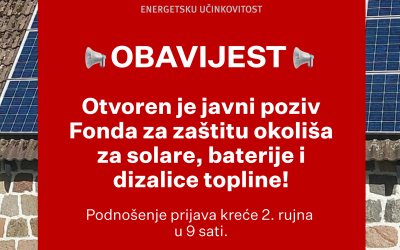
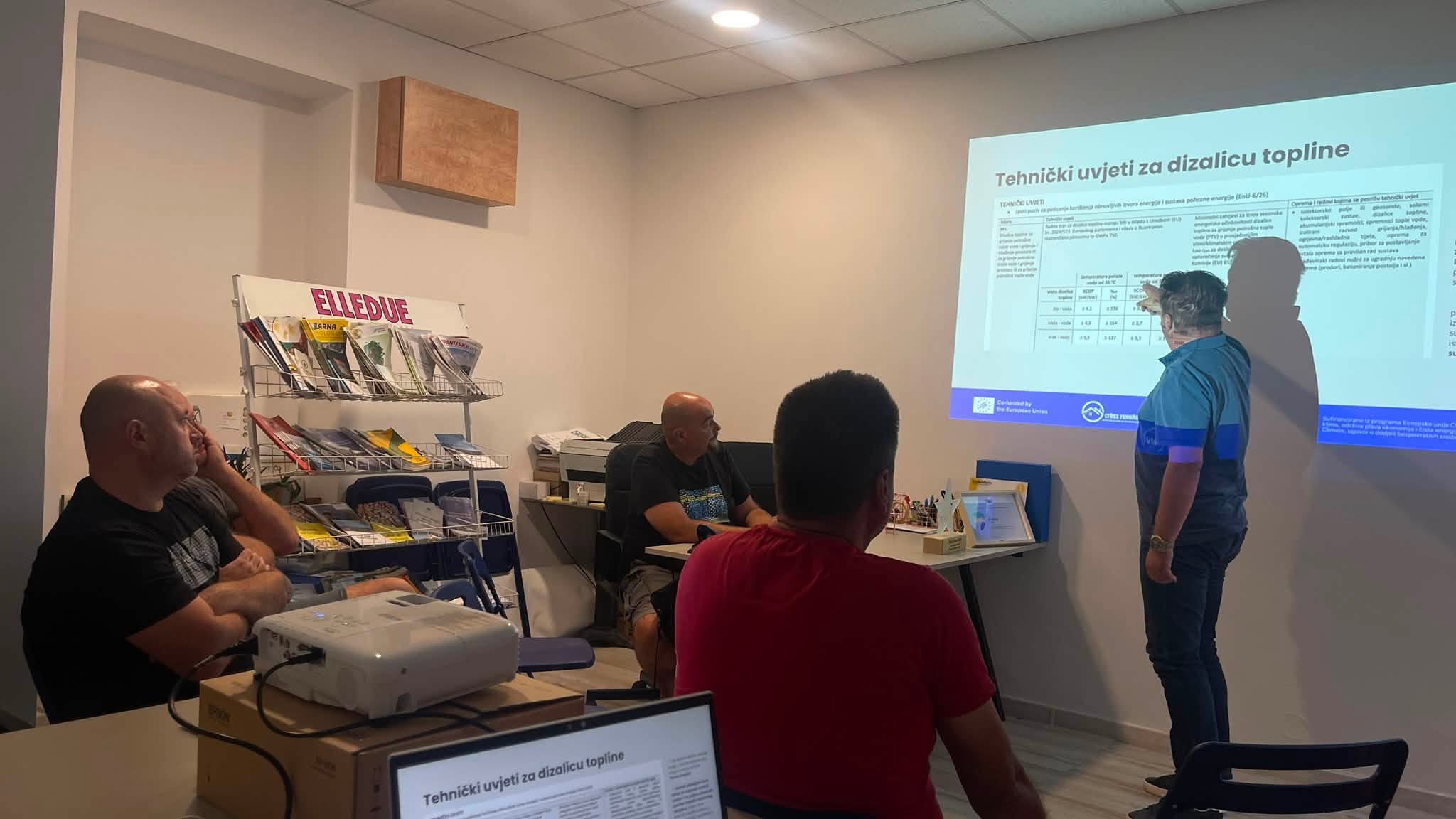
On August 17, 2026, KLIK held the second workshop on the Environmental Protection and Energy Efficiency Fund (FZOEU) public call for co-financing solar power plants and heat pumps at its office at Trg J. J. Strossmayera 26 in Križevci.
The workshop was held shortly before applications opened on September 2, giving citizens timely and practical information to help them prepare their applications.
As with the first workshop, special attention was given to the requirements related to heat pump installations. Since an energy audit and energy certificate are mandatory requirements for applying for heat pump co-financing, the workshop featured energy certifier Krunoslav Škrlec as a guest speaker.
The workshop was free of charge and open to all interested citizens and was held as part of the LIFE crOss renoHome project.
From Application Requirements to the Installation Process
Participants received more detailed information about the conditions and opportunities provided by the FZOEU public call, as well as the steps involved in preparing an application.
The energy certifier explained what an energy audit involves, what information an energy certificate provides, and why these documents are important when considering an investment in a heat pump.
The workshop also addressed how to assess the cost-effectiveness of an investment, which characteristics of a building have the greatest impact on heating and cooling system efficiency, and which requirements are important for subsidy eligibility.
Unlike the first workshop, this session placed particular emphasis on the practical aspects of heat pump installation. Citizens learned what to expect during the installation process and which elements they should pay attention to when preparing for the installation.
Heat Pumps and Solar Power Plants as an Integrated Energy Solution
Another important topic was the possibility of combining a heat pump with a solar power plant. Participants learned how the two systems can work together and how their combination can contribute to more efficient energy use in households.
The workshop also focused on whether citizens meet the eligibility requirements, including the requirement of having an energy rating of class C or better, and whether investing in a heat pump and applying for the subsidy makes economic sense for their individual situation.
A total of six citizens participated in the workshop and had the opportunity to discuss specific questions related to the application process and heat pump installation with the experts.
Building on the First Workshop – From Awareness to Practical Preparation
The second workshop built on the first session, held on July 31, allowing citizens to take another step from general awareness towards concrete preparation for applying for the subsidy and implementing their planned investment.
While the first workshop focused primarily on introducing citizens to the available co-financing opportunities and basic requirements, the second session provided more practical information about the application process, eligibility, and the actual heat pump installation procedure.
Through the two workshops, KLIK provided citizens with continuous support — from their initial introduction to available funding opportunities to practical preparation for applying for and installing a heat pump.